Imagine planning to retire in 2028 with a $1 million investment portfolio and annual living expenses of $80,000.
You expect to withdraw $50,000 annually from your investments, with Social Security, a pension, or other income covering the remaining $30,000.
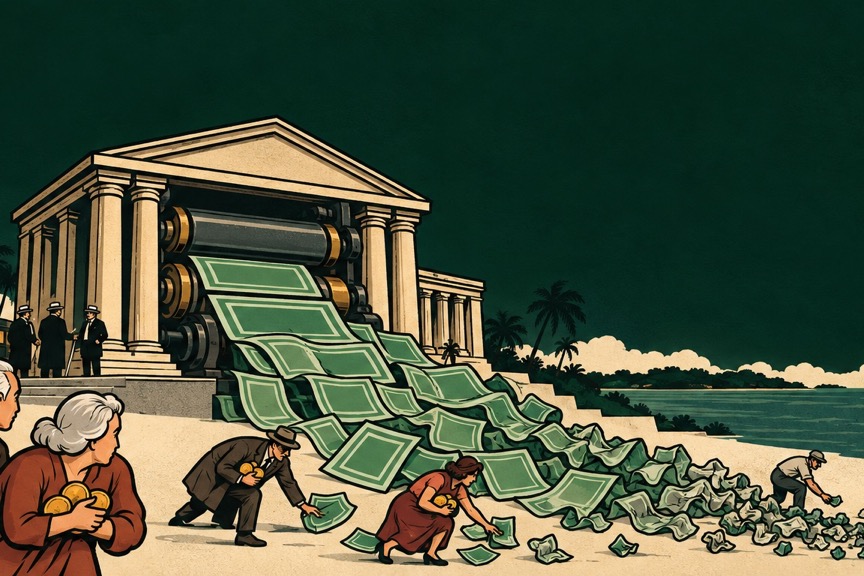
Now consider what happens if inflation averages just 3% annually.
Ten years later, maintaining that same lifestyle would cost approximately $107,500 per year, an increase of more than $27,000 without any improvement in your standard of living.
And inflation is only part of the picture.
Federal borrowing, interest rates, market volatility, and the economic policies that follow the 2026 midterm elections all deserve attention from Americans nearing retirement.
The November 3 election will determine the balance of power in Washington. But the financial challenges facing retirees extend well beyond Election Day.
Understanding those challenges is the first step toward making more informed decisions.
1. Elections Change Policy, but Retirement Challenges Remain
Congress influences federal taxes, government spending, and the laws that affect businesses and households.
Continued Republican control would provide President Donald Trump's administration with greater opportunities to advance its legislative agenda. Democratic control of one or both chambers would introduce different priorities, increased oversight, and potentially more difficult negotiations over legislation.
These differences matter because tax changes affect how much retirement income people keep, while government spending and borrowing decisions influence the broader economy.
However, no congressional outcome guarantees lower inflation, stronger investment returns, or more favorable interest rates.
For Americans approaching retirement, understanding the policies being debated is more useful than assuming a particular election result will solve their financial concerns.
One of those concerns is already affecting household budgets.
2. Inflation Doesn't Retire When You Do
According to the Bureau of Labor Statistics, consumer prices increased 3.7% during the 12 months ending September 2026, compared with 3.4% in August. Energy prices increased 20.4% over the same period.
These numbers represent more than economic headlines. They affect the cost of groceries, transportation, housing, and other everyday necessities.
For someone still working, salary increases sometimes help offset higher expenses.
Retirement changes that equation.
Many retirees depend on Social Security, pensions, and savings withdrawals. Some income sources increase with inflation, while others remain fixed.
The Social Security Administration announced a 3.6% cost-of-living adjustment for 2027, representing an average increase of about $75 per month for retired workers.
That increase helps, but it does not guarantee that every household's income will keep pace with its expenses.
Healthcare, insurance, and housing costs can rise at different rates. A retiree whose pension never increases faces an additional challenge as prices climb.
Recall the opening example: even modest annual inflation substantially changes the income needed to maintain the same lifestyle over a decade.
There is also an important difference between inflation slowing and prices falling.
When inflation drops from 4% to 2%, prices generally continue increasing, just more slowly.
That is why retirement planning involves more than accumulating a certain dollar amount. It also involves understanding what those dollars will purchase in the future.
3. Federal Debt and Interest Rates: What Retirees Should Understand
The federal government borrows money when its spending exceeds the revenue it collects.
Like a household with a loan, the government pays interest on what it owes.
According to the Congressional Budget Office's February 2026 outlook, annual net interest costs are projected to rise from approximately $1 trillion in 2026 to $2.1 trillion by 2036.
That means a growing amount of federal spending would go toward interest payments rather than other government priorities.
These projections do not mean a financial crisis is inevitable. They illustrate why federal borrowing and future budget decisions remain important economic issues.
Why Interest Rates Matter
Interest rates influence both the cost of borrowing money and the income people earn from certain savings and investments.
On October 28, 2026, the Federal Reserve voted 10–2 to maintain its benchmark interest-rate range at 3.75% to 4.00%. The two dissenting officials preferred raising rates by one-quarter of a percentage point.
Some market observers anticipate another increase in December, although the Federal Reserve has not announced that decision.
What does this mean for someone approaching retirement?
Higher interest rates can help savers earn more on certain bank accounts and newly issued bonds. A bond is essentially a loan an investor makes to a government or company in exchange for interest payments.
But higher rates also make borrowing more expensive. They can reduce the market value of existing bonds and influence stock prices.
There is no single interest-rate environment that benefits every retiree equally.
The important distinction is between the amount of money an investment is worth and the purchasing power that money provides.
A retirement account can increase in dollar value while still losing purchasing power if its growth fails to keep up with inflation.
Understanding that difference helps put investment performance into perspective.
4. Market Volatility: Why Retirement Timing Matters
Market downturns are a normal part of investing. For retirees, however, the timing of a downturn can be especially important.
Return to our hypothetical individual retiring in 2028 with a $1 million portfolio.
They plan to withdraw $50,000 annually to supplement other income.
Now imagine their investments decline 20% during the first year of retirement.
The portfolio falls to $800,000.
After a $50,000 withdrawal at year-end, the remaining balance is $750,000.
To return to the original $1 million, the remaining investments would need to gain approximately 33.3%, assuming no further withdrawals, contributions, taxes, or fees.
This simplified example demonstrates sequence-of-returns risk.
In plain English, it means that losing money early in retirement can be particularly damaging because withdrawals leave less invested for a potential recovery.
Someone who is still working can often continue adding money during market declines. Retirees who depend on their portfolios for income face a different situation.
Morningstar's 2025 retirement-income research estimated a 3.9% starting withdrawal rate under a model assuming 30 years of retirement, inflation-adjusted spending, and a 90% probability of funds remaining.
Our hypothetical retiree's $50,000 withdrawal equals 5% of their starting portfolio.
That comparison does not establish whether their plan will succeed or fail. Other income, taxes, investment choices, retirement length, and the ability to adjust spending all influence the outcome.
The lesson is straightforward: How and when retirement savings are withdrawn matters alongside how much has been saved.
Understanding that risk can lead to more informed discussions about cash reserves, spending flexibility, and diversification.
5. Where Gold and Silver Fit Into the Retirement Conversation
Diversification means spreading investments across different types of assets rather than depending entirely on one source of performance.
Physical gold and silver have characteristics that differ from stocks and bonds. Understanding those differences helps individuals evaluate whether precious metals belong in their broader financial picture.
Gold: A Different Type of Asset
Gold is a physical asset that does not depend on a company making a profit or a borrower repaying a loan.
Its price is influenced by interest rates, central-bank purchases, investor demand, and global economic conditions.
In its February publication, Gold as a Strategic Asset: 2026 Edition, the World Gold Council examines gold's historical performance and diversification characteristics.
The research explains how gold has behaved differently from traditional investments during certain periods of financial stress.
That does not mean gold always rises when stocks fall. Its price can decline substantially, and it does not provide regular interest or dividend income.
Silver Has Different Economic Drivers
Silver also has a long history as a precious metal, but its extensive industrial uses make it different from gold.
Silver is used in electronics, solar technology, and manufacturing.
As a result, its price responds to both investment demand and changes in industrial activity. Silver often experiences greater price volatility than gold.
Investors should understand these differences rather than assume the two metals perform identically.
What Do Elections Mean for Gold?
In his October 22 analysis, Gold and Midterms: Is This Time Different?, World Gold Council research leader Juan Carlos Artigas wrote:
“Historically, the outcome of US elections has not had a consistent or significant effect on gold’s performance.”
His analysis focuses on the economic and monetary policies that follow elections, alongside the global forces affecting gold demand.
This is an important distinction for anyone considering precious metals.
Their potential role should be evaluated through an understanding of their characteristics and risks, not a prediction about which political party will perform better for a particular investment.
Physical metals also involve costs.
Buyers generally pay a dealer price above the prevailing spot price, which is the market reference price for the metal itself. Storage, insurance, and selling costs can apply.
Holding eligible precious metals in a self-directed IRA introduces additional custodial requirements and expenses.
These considerations belong in any balanced discussion of diversification and purchasing-power risk.
The Election Is Temporary. The Financial Decisions Are Not.
The economic issues discussed here affect retirement in different ways.
Inflation changes the cost of living. Interest rates influence savings income and investment values. Market downturns can complicate withdrawals, particularly early in retirement.
Gold and silver introduce another set of characteristics, opportunities, and risks.
Understanding these relationships does not eliminate uncertainty. It provides a stronger foundation for evaluating financial choices.
At American Wealth Group, we believe education should come before any decision involving physical precious metals.
Political leadership changes over time. The importance of understanding your financial choices does not.
Explore the 2026 Gold & Silver IRA Guide
Interested in learning how physical gold and silver work, including how eligible precious metals can be held in a self-directed retirement account? American Wealth Group's 2026 Gold & Silver IRA Guide explains the process, important requirements, and considerations worth understanding before making a decision. Or reach out and we will talk it through with you.*
Visit American Wealth Group to learn more about the guide Talk With Us
Important Disclosures: This article is provided for educational and informational purposes only and does not constitute personalized financial, investment, tax, or legal advice. American Wealth Group is a precious metals dealer, not a fiduciary investment adviser.
American Wealth Group earns revenue from precious metals sales. The purchase price includes a dealer spread above the prevailing spot price. Physical precious metals involve market risk, transaction costs, and potential loss of principal.
Past performance does not guarantee future results. American Wealth Group is not affiliated with or endorsed by any government agency. Consult qualified financial and tax professionals before making retirement-related decisions.