Education, not investment advice. Consider the risks and discuss your circumstances with your own adviser.
The American banking system has long been a cornerstone of global finance, a symbol of stability and strength. However, over the years, cracks have appeared in its structure, leading to a series of financial crises that have questioned its resilience. The downfall of the American banking system, while not a single event but rather a culmination of decades of policy, regulatory decisions, and systemic issues, marks a critical point in economic history.
The Foundations of the American Banking System
To understand the downfall, it’s important to consider the foundations of the American banking system. Initially, the system was built on trust and regulation, with institutions like the Federal Reserve guiding monetary policy and ensuring financial stability. Banks were primarily focused on lending, savings, and facilitating economic growth. For much of the 20th century, the system operated under a framework that promoted stability, with key regulatory measures like the Glass-Steagall Act (1933), which separated commercial and investment banking, ensuring that banks could not speculate with consumer deposits.
However, by the late 20th century, the banking landscape began to change, driven by globalization, deregulation, and technological advancements. These shifts led to greater risk-taking, the emergence of complex financial products, and a reduction in the oversight of financial institutions.
Deregulation and the Rise of Risk
The seeds of the eventual downfall can be traced back to the 1980s and 1990s, with a series of deregulatory moves that began under President Ronald Reagan and were expanded in the 1990s under President Bill Clinton. In 1999, the Glass-Steagall Act was repealed with the Gramm-Leach-Bliley Act, which allowed commercial banks to re-enter investment banking and securities trading. This shift opened the door for banks to engage in more speculative activities, merging traditional banking with riskier financial ventures. The idea was that diversification would reduce risk, but in reality, it exposed the entire banking system to greater volatility.
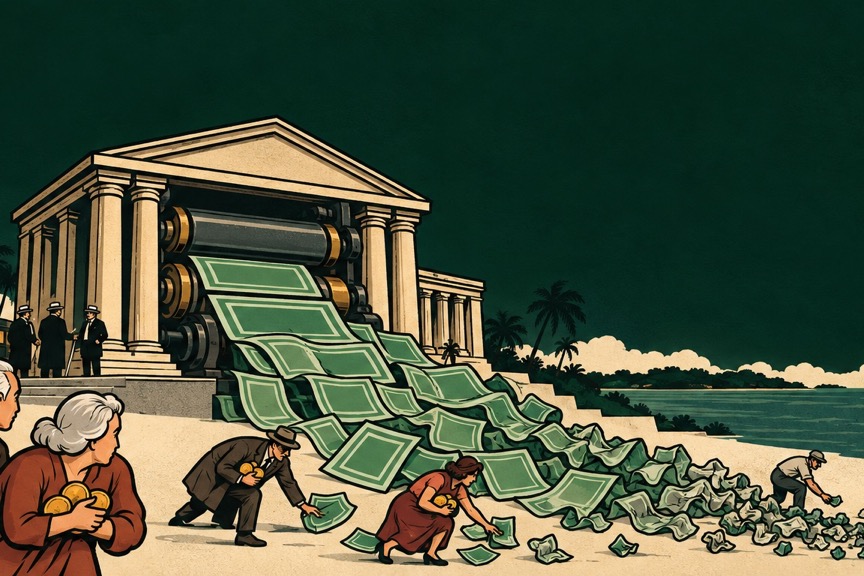
As the banking industry became more interconnected with global markets, institutions took on more risk in the form of mortgage-backed securities (MBS), credit default swaps (CDS), and other complex derivatives. Many of these products, while profitable in the short term, carried immense risks that were poorly understood by both the banks themselves and regulators.
The 2008 Financial Crisis: A Wake-Up Call
The culmination of years of deregulation and risky financial practices came to a head in 2008 with the collapse of Lehman Brothers and the ensuing financial crisis. The subprime mortgage crisis, combined with the bursting of the housing bubble, revealed the fragility of the banking system. Banks had over-leveraged themselves, taking on massive amounts of debt in the pursuit of profits from MBS and CDS. When the housing market crashed, these financial products lost their value, leading to a cascade of failures across the financial sector.
The government’s response to the crisis—bailing out major financial institutions through programs like the Troubled Asset Relief Program (TARP)—exposed the deep-seated problems within the system. While these measures helped stabilize the economy, they also highlighted the moral hazard of banks’ behavior. Many of the institutions that had caused the crisis were rewarded with taxpayer-funded bailouts, while ordinary Americans suffered from job losses, foreclosures, and a collapse in wealth.
The Aftermath and Long-Term Effects
Despite the government intervention, the aftermath of the 2008 crisis continued to reverberate through the banking system. The Dodd-Frank Wall Street Reform and Consumer Protection Act (2010) was passed to address some of the systemic risks, imposing stricter regulations on banks, including the Volcker Rule, which limited speculative trading, and the creation of the Consumer Financial Protection Bureau (CFPB). However, critics argue that these regulations were not enough to address the root causes of the crisis and did little to curb the power of the largest financial institutions.
In the years following the crisis, banks became more concentrated, with a few major institutions dominating the market. The “too big to fail” problem persisted, as these institutions grew even larger, with governments and central banks still seen as unwilling to let them collapse due to their systemic importance.
The Decline of Trust and the Rise of Alternatives
Fast forward to the 2020s, and the American banking system is facing new challenges. Public trust in banks has steadily declined, as many individuals feel that the system is rigged to benefit the wealthy and the powerful. The rise of fintech companies, digital currencies, and alternative financial services has provided consumers with new options, further undermining the traditional banking model. The decentralization of finance, driven by technologies like blockchain, has led to a growing distrust of traditional financial institutions and their ability to serve the needs of ordinary citizens.
Additionally, the 2020 COVID-19 pandemic exposed further vulnerabilities in the system. While central banks like the Federal Reserve responded with unprecedented levels of monetary stimulus, including massive bond-buying programs and near-zero interest rates, the long-term effects of such interventions remain uncertain. The growing national debt, rising inflation, and the risk of future financial instability continue to hang over the American banking system.
The Future of the American Banking System
The collapse of the American banking system, if it were to occur, would not be a sudden event, but rather the result of cumulative failures in regulation, risk management, and public trust. The challenges facing the banking sector today are manifold: competition from fintech, a rising distrust of large financial institutions, the growing importance of digital currencies, and the potential for future economic instability.
To prevent further deterioration, the U.S. will need to re-evaluate the role of traditional banks in the economy, update regulatory frameworks to better address modern financial products, and find ways to restore trust with the public. There is also a need to reconsider the size and scope of the largest financial institutions, ensuring that they are not too big to fail.
In conclusion, while the American banking system may not be in a complete state of collapse, it is clear that the system as it exists today is under immense strain. The challenges of the 21st century—technological disruption, financial globalization, and political uncertainty—have created a perfect storm of risks that could lead to further breakdowns in the system. The path forward will require significant reforms and a reconsideration of the very structure of American finance.
Wondering What This Means for Your Savings?
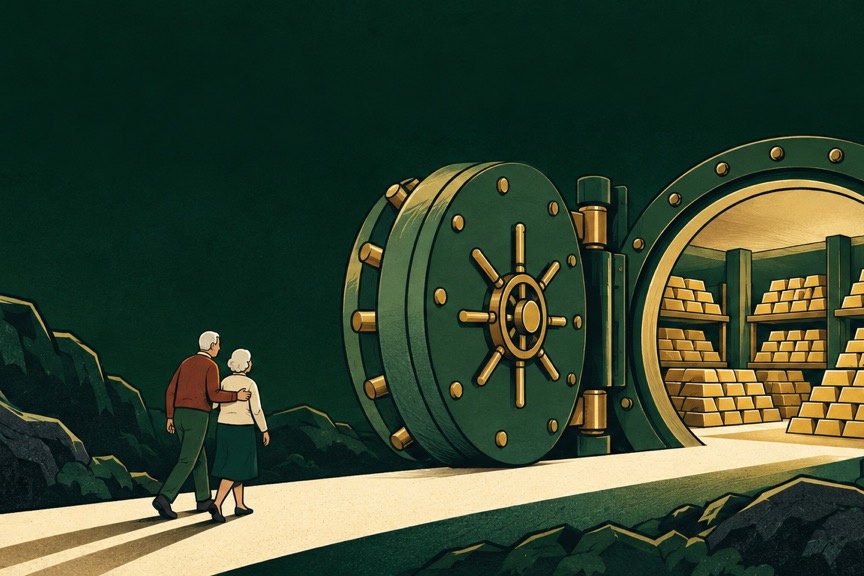
If the strain on the banking system has you thinking about how your own savings are held, our free guide walks through diversification, custody and costs, plus the questions worth asking before you make any change. Or reach out and we will talk it through with you.